
Composites
Overview
SRL’s Composites Team is responsible for the design, fabrication, and testing of the composite structures that makes up a vast majority our rockets. Some of these components includes:
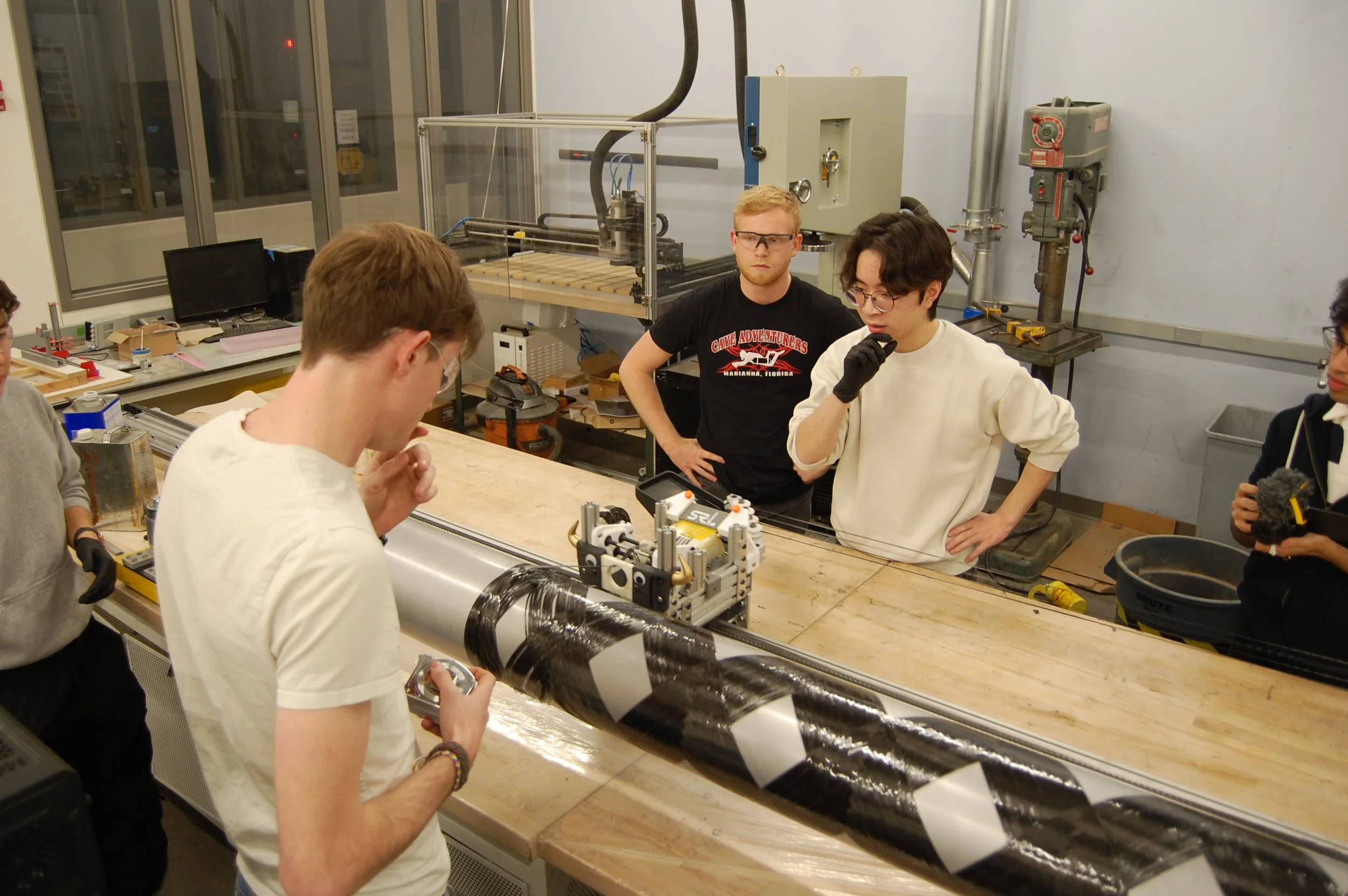
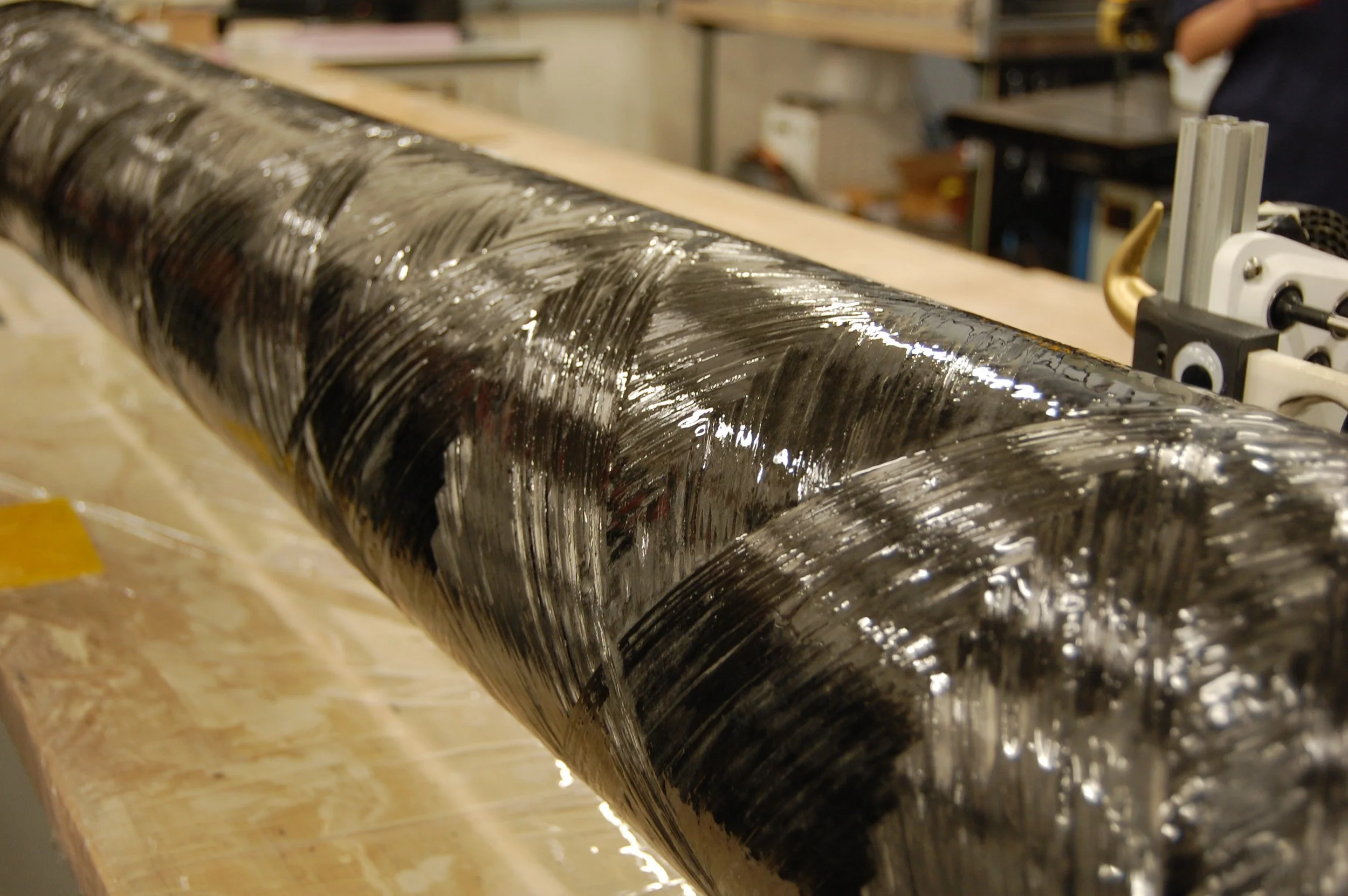
Carbon fiber rocket motor casings to withstand immense pressure during motor firing. These casings automatically produced by our in-house filament winder
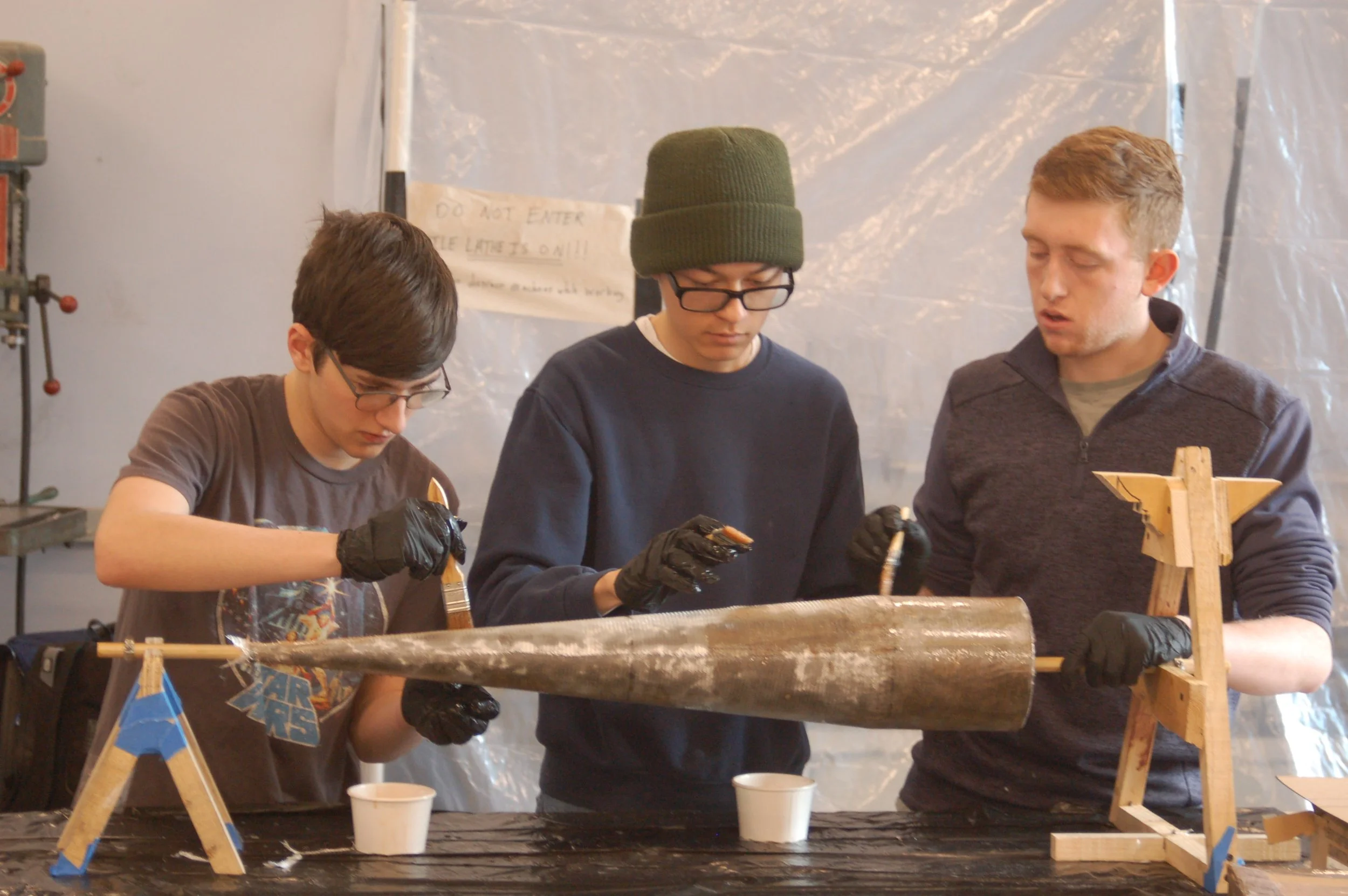
Aramid-composite motor insulation and propellant casting tubes which protect the motor casing from the extreme temperatures of burning propellant
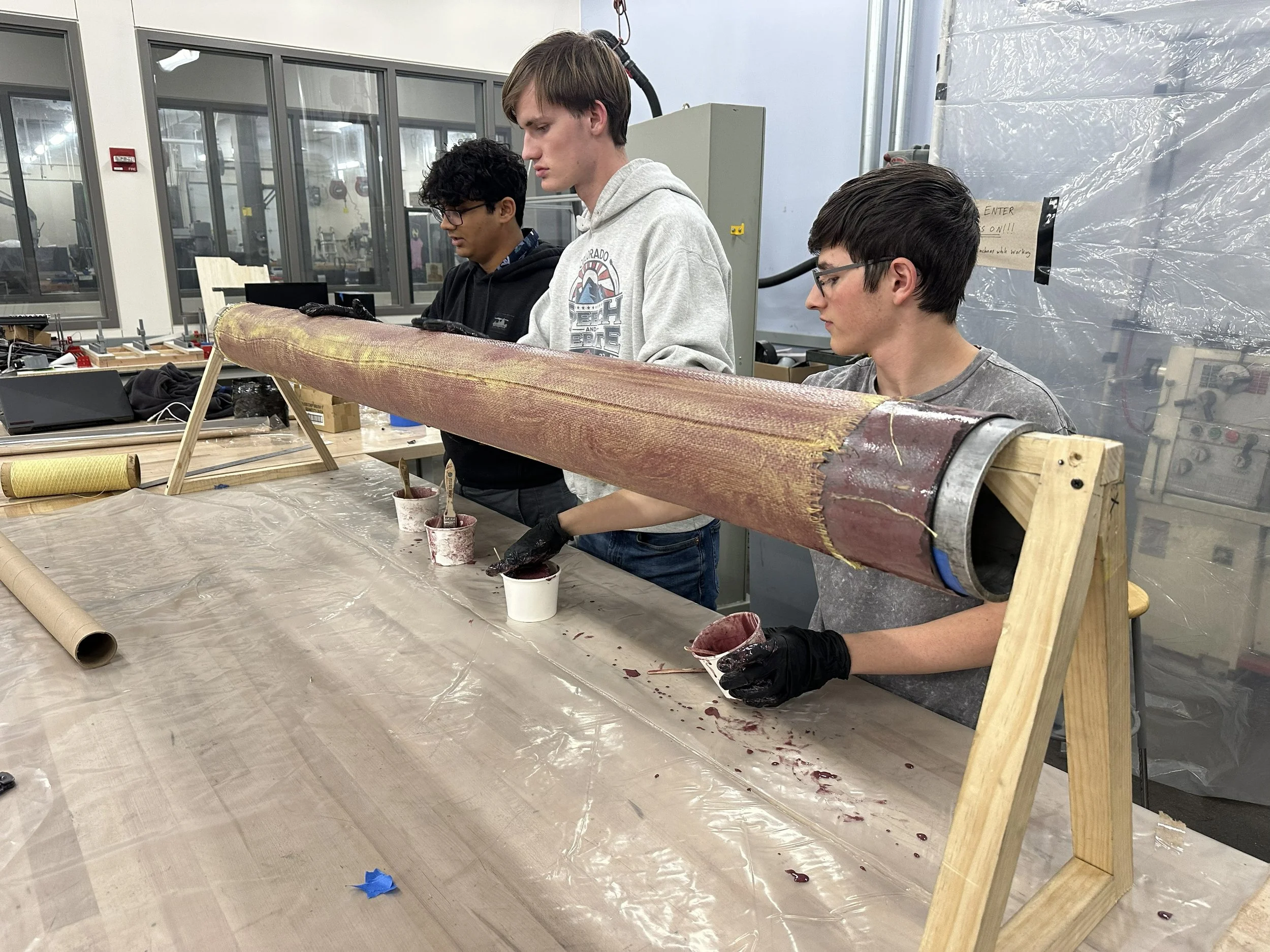
Fiberglass-composite airframe components to house recovery hardware and onboard flight computers
Through participation in the Composites team, our members gain experience in composite laminate theory, destructive testing, and safety-driven manufacturing practices.
Key Accomplishments
Provided casings for 2 P-class and 2 Q-class solid motors, as well as 10+ motors of various classes
100+ miles of carbon fiber tow wound
Aramid-composite insulators for 10+ solid motors and liquid rocket engines
Fiberglass airframes that survived Mach 3 and 16+ Gs
Winding
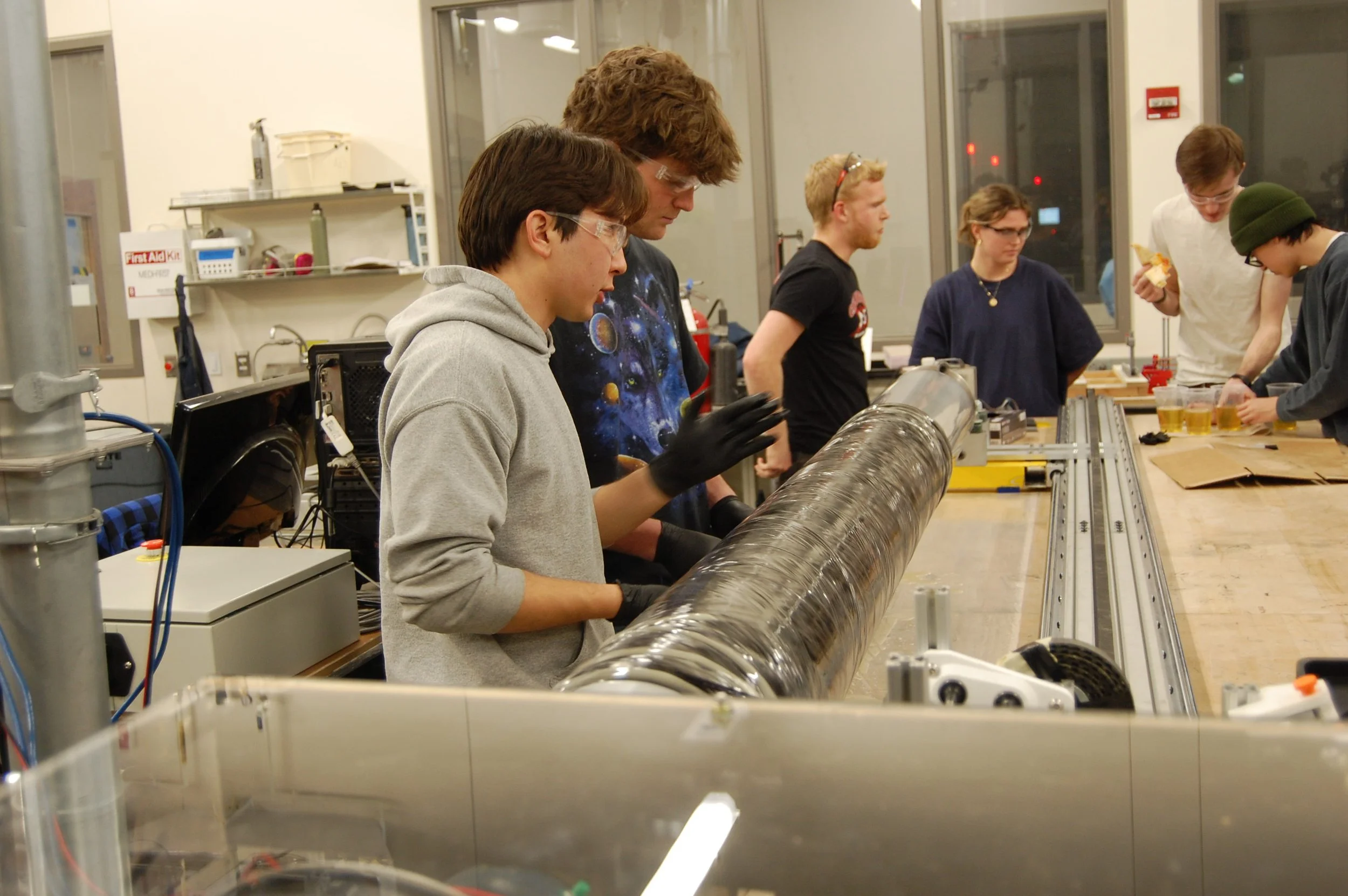
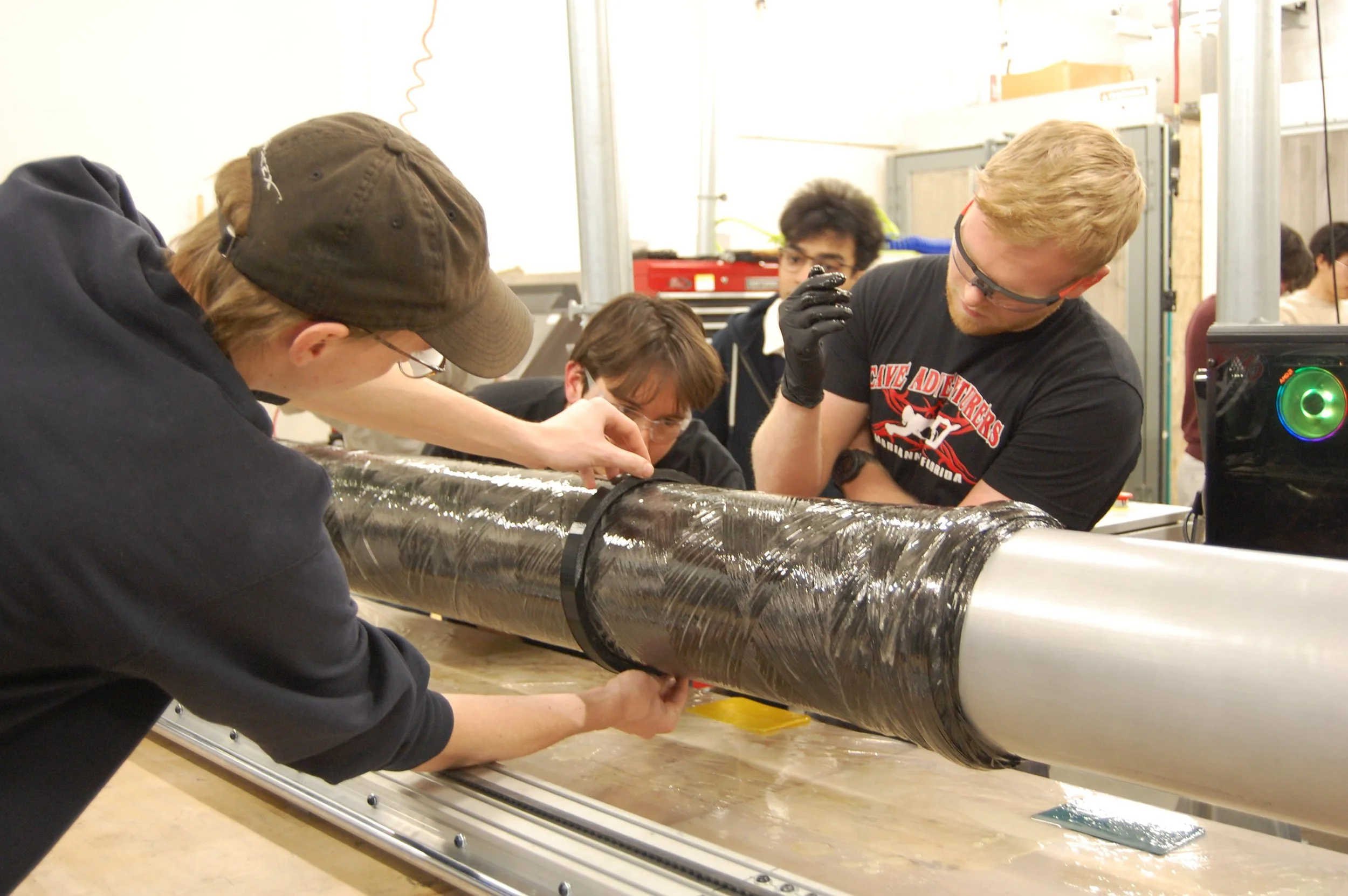
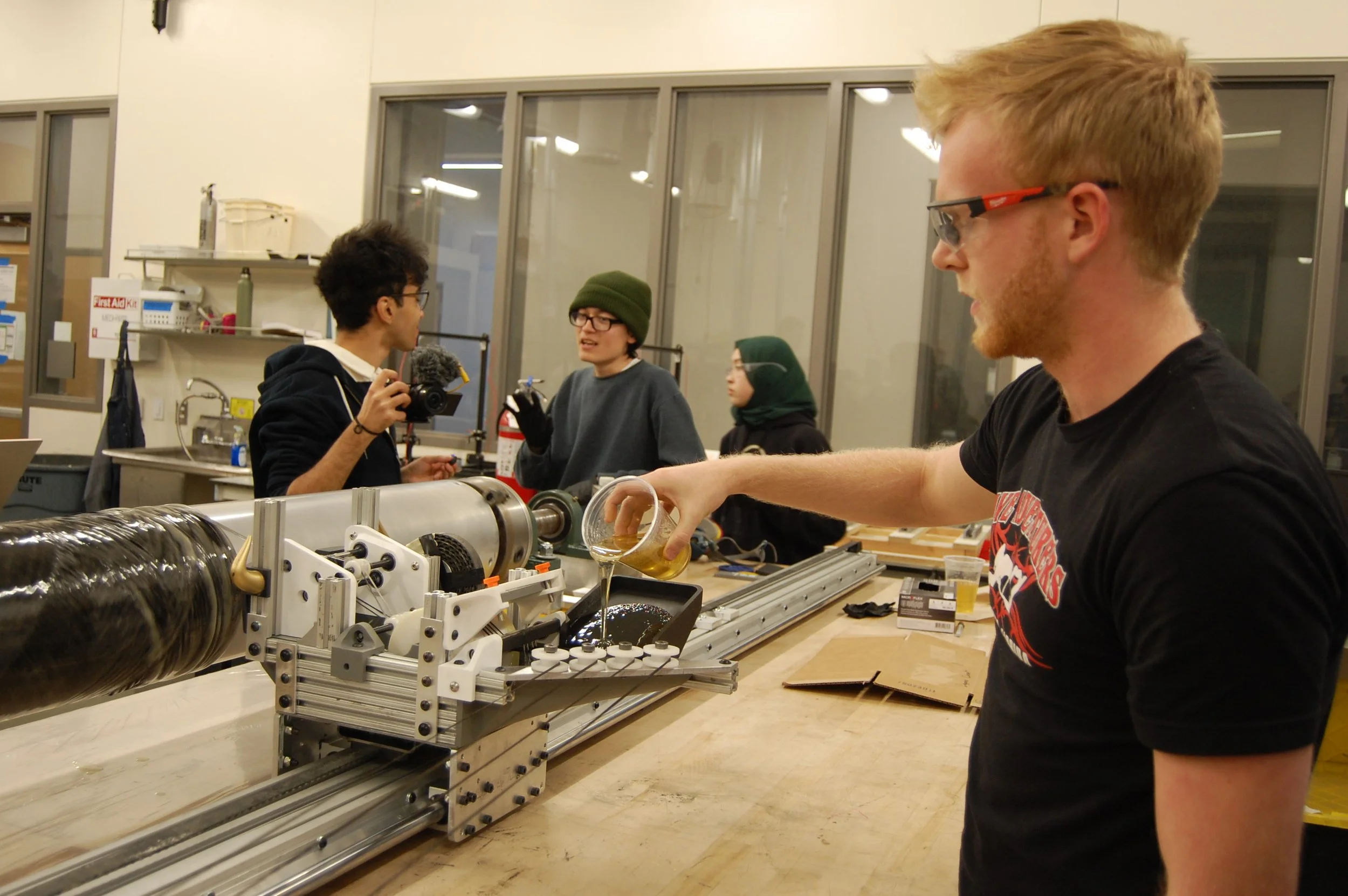
Many of SRL’s larger composite components are wound on a filament fiber winder designed and built by our members. We primarily wind with Carbon Fiber tow for our motor casings, but SRL has in the past wound fiberglass components for earlier flight vehicles. Currently, SRL Composites operates the 2-axis BUFF-Winder meant to manufacture our future R-class motor casings.
Layups
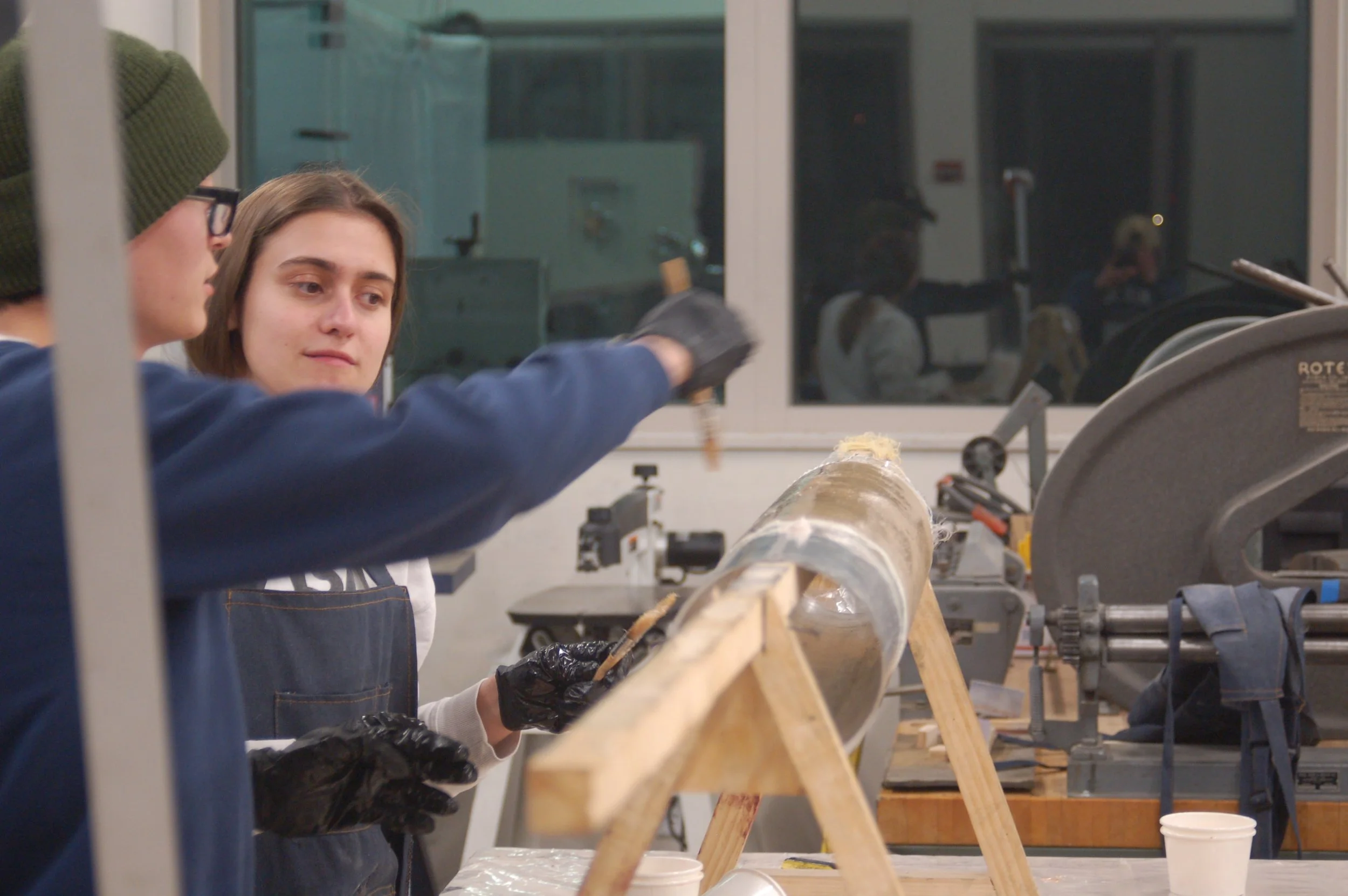
SRL is no exception to making composites the old fashion way, It’s how some of our more important composite components are made. From the aramid composite insulators inside the motor casing to the fiberglass airframe on top of the whole rocket, all these components are hand-layer on top of custom composite tooling by SRL’s members. Our layups are also augmented in various ways like vacuum bagging and high temp oven-curing.


Post Processing, assembly, and testing
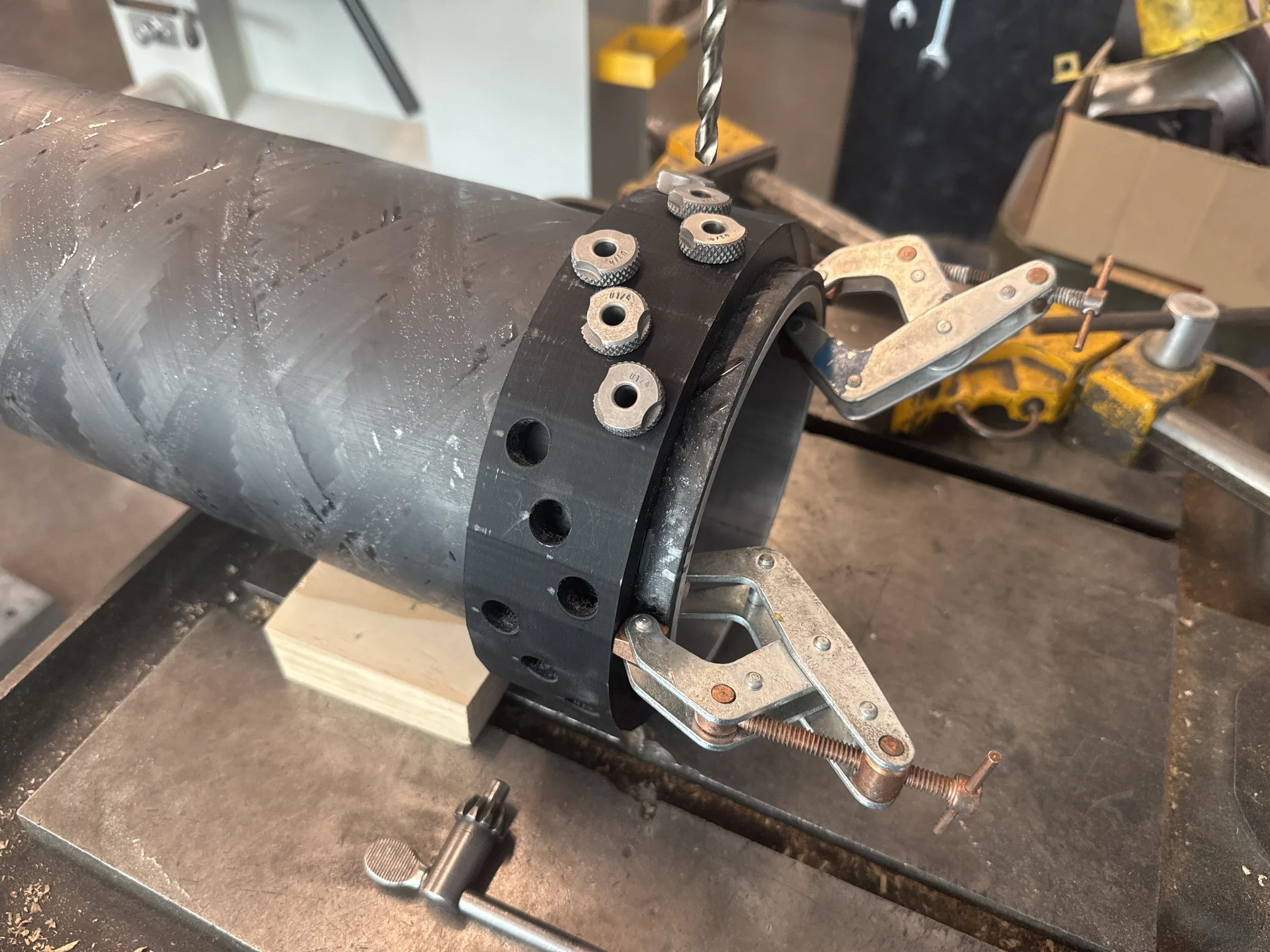
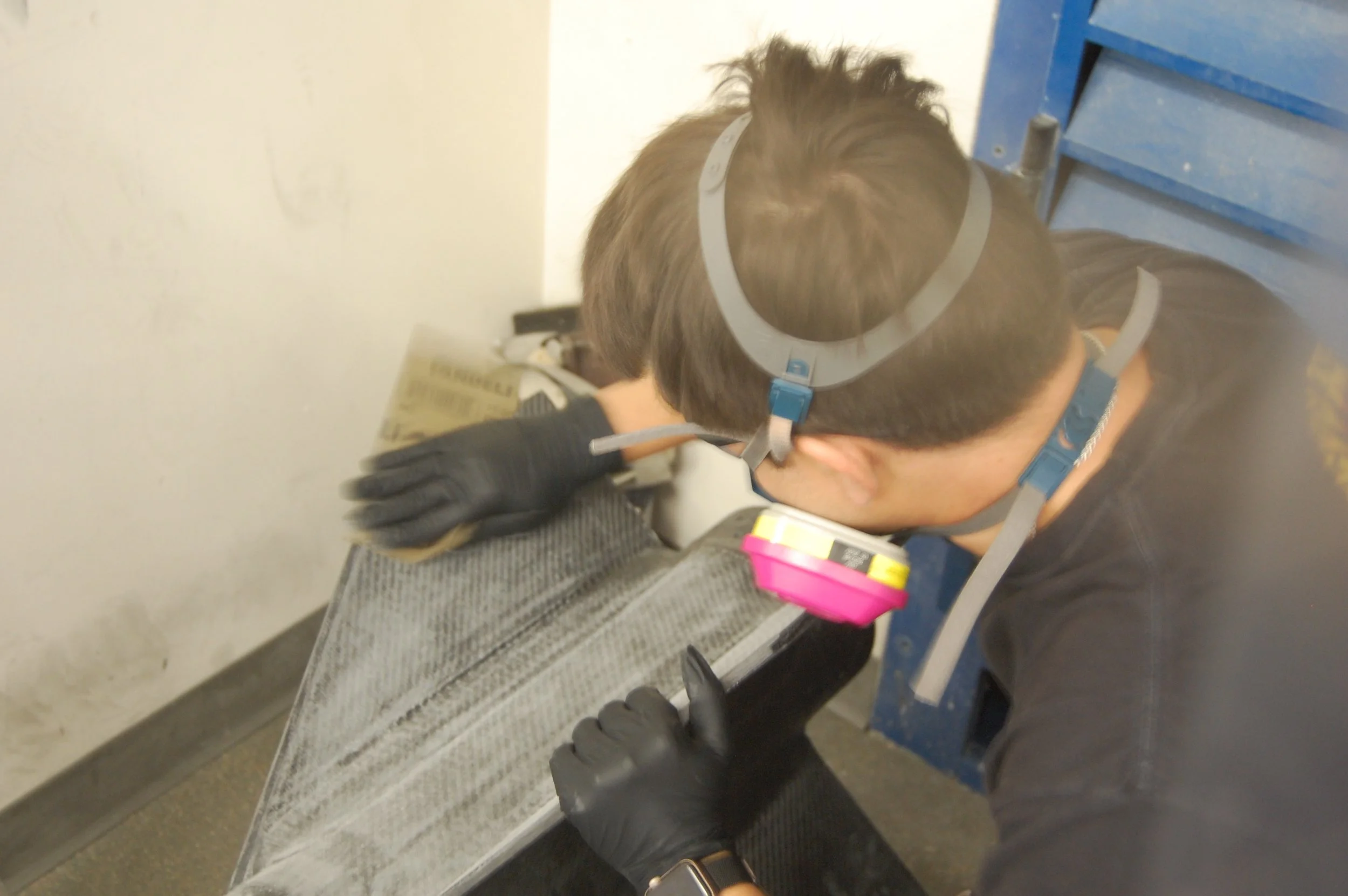
Once components are manufactured, they go through various post processing steps before initial and final assembly. Some of these steps include extraction, trimming, and sanding.
In addition to manufacturing, the team performs material characterization through mechanical and thermal testing to ensure strength, safety, and performance in extreme environments.

Composites Photos & Media
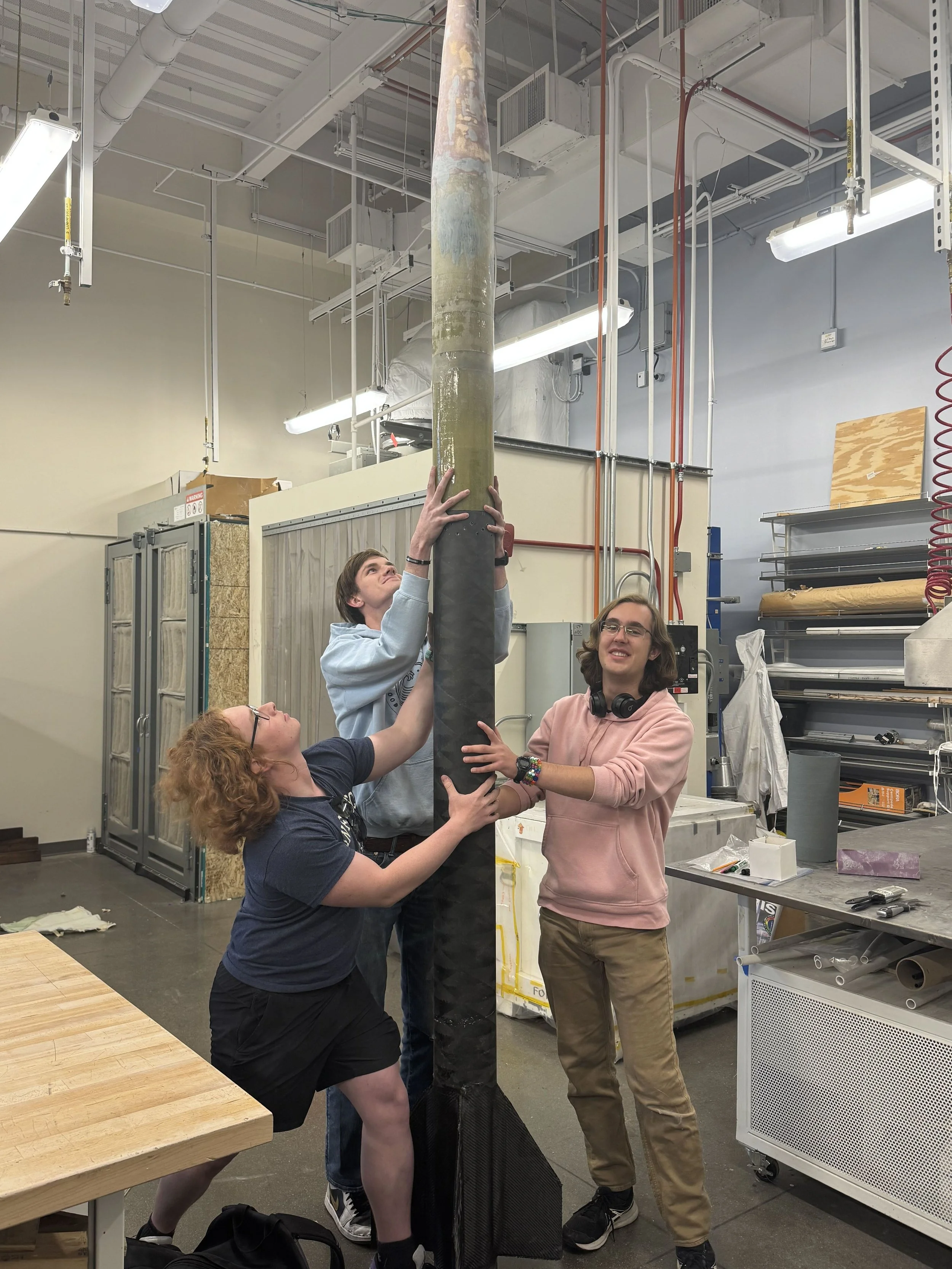
Mamba III first stack up
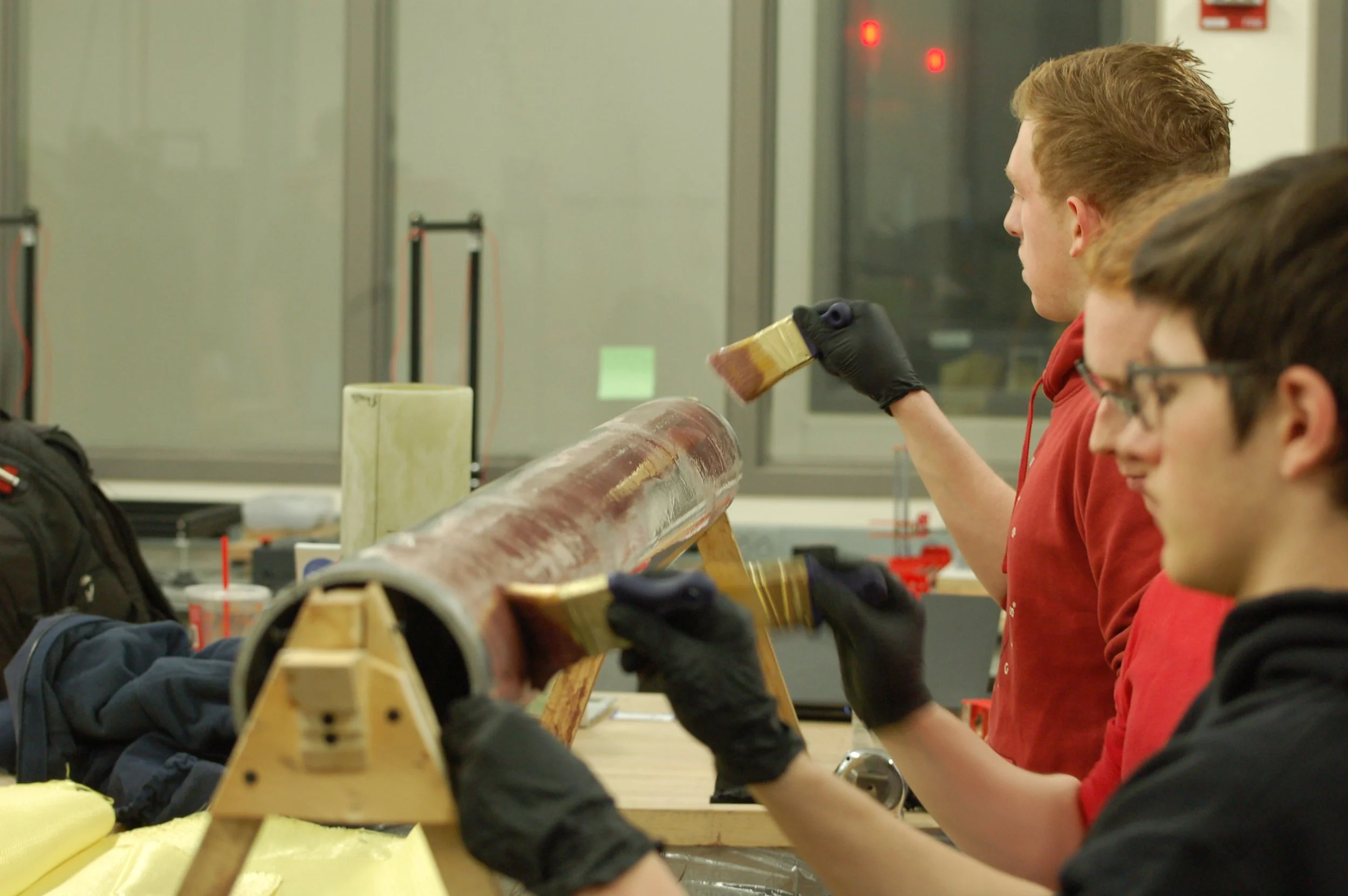
Mamba III Insulator Layup
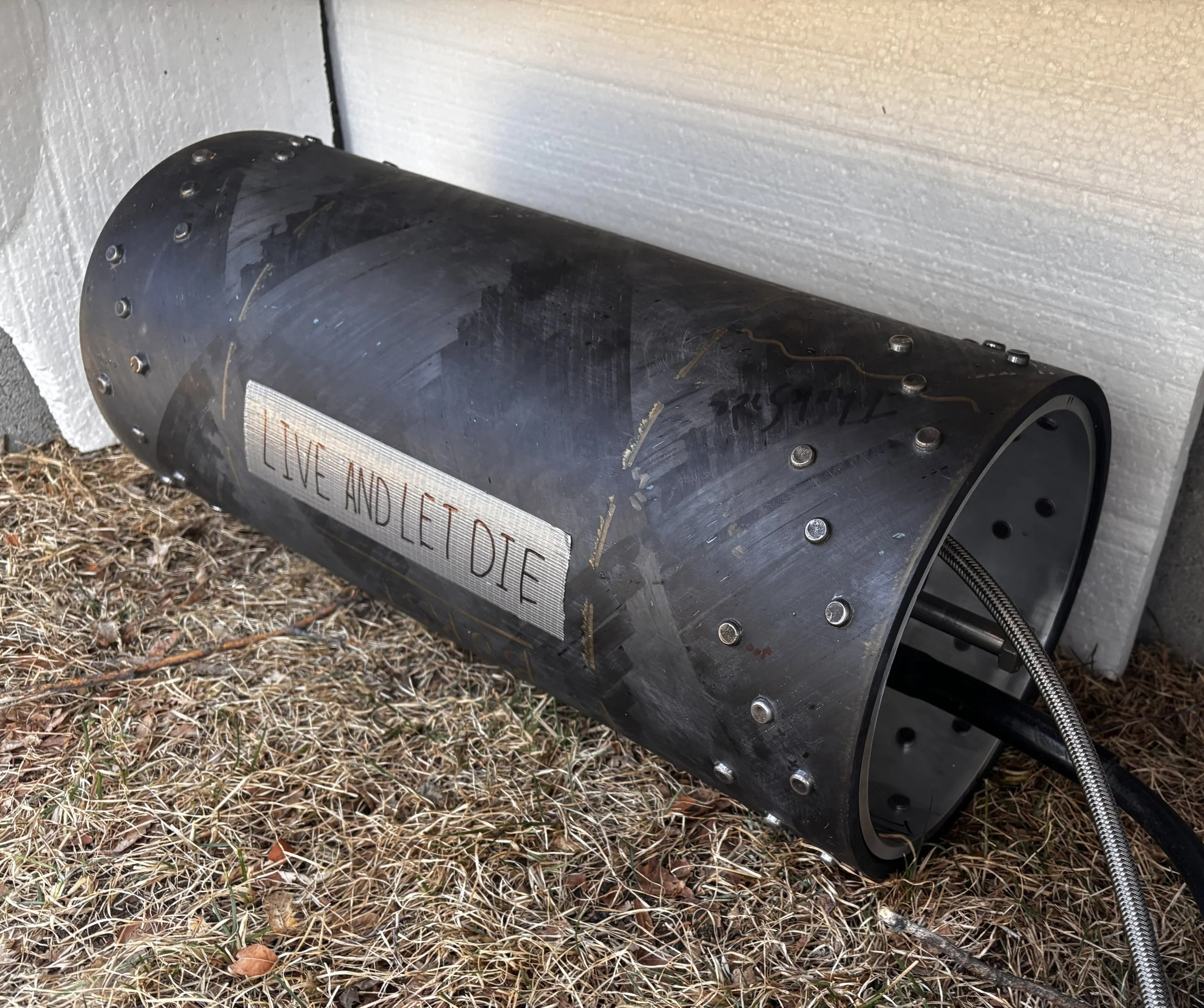
"Live and Let Die" 8" Burst Casing
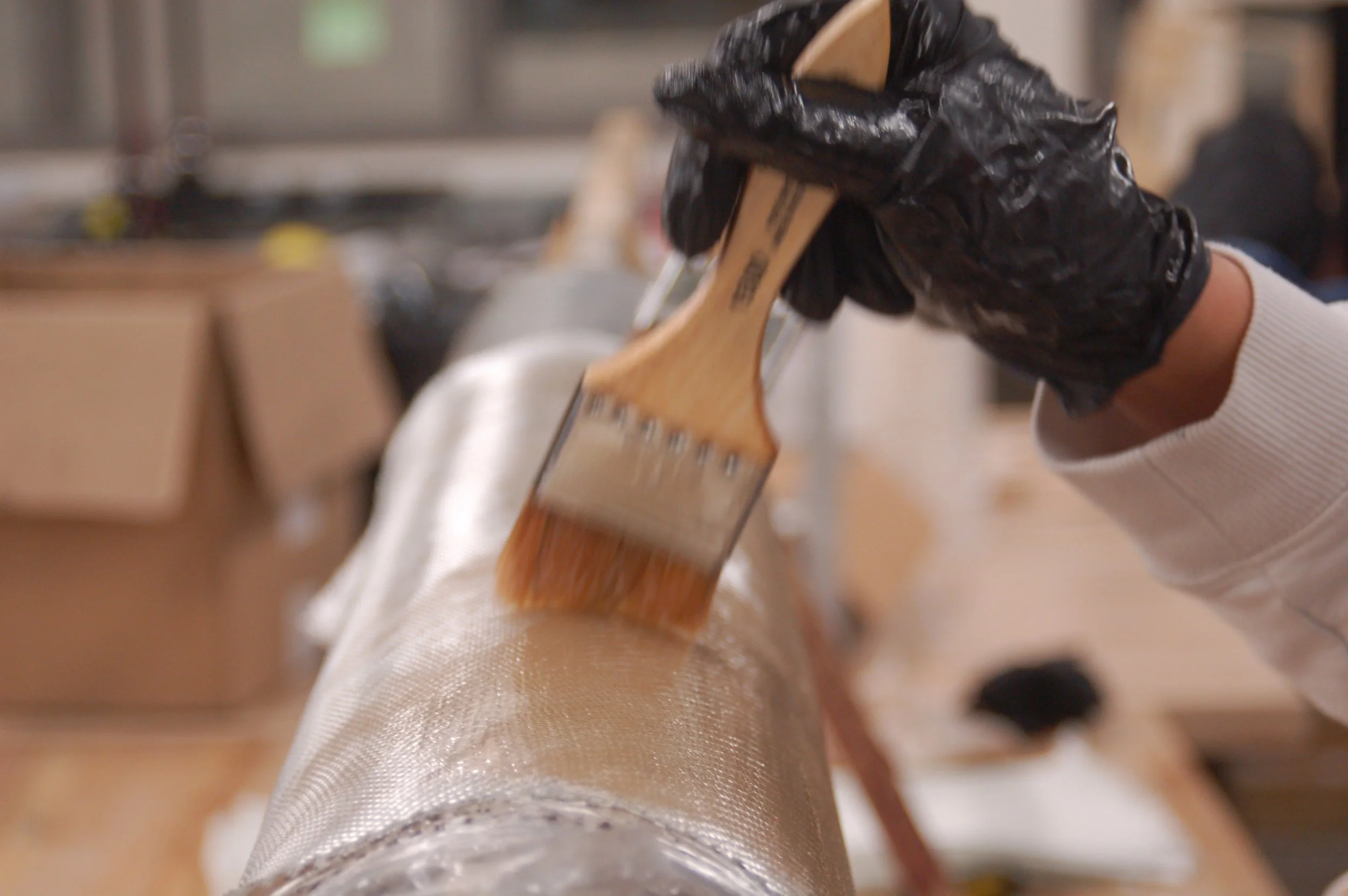
Mamba III Airframe Layup
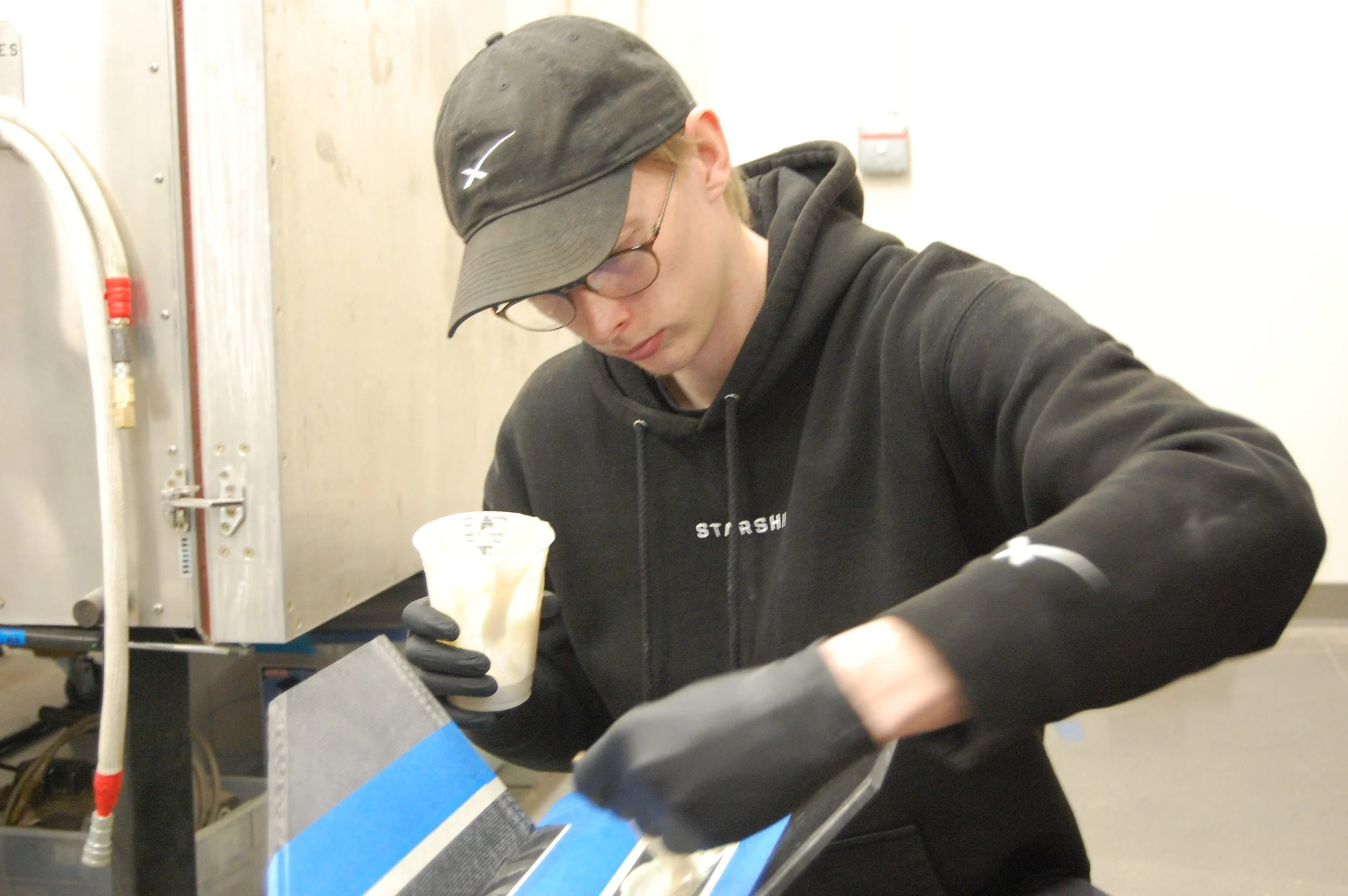
Mamba III Fin Fillets
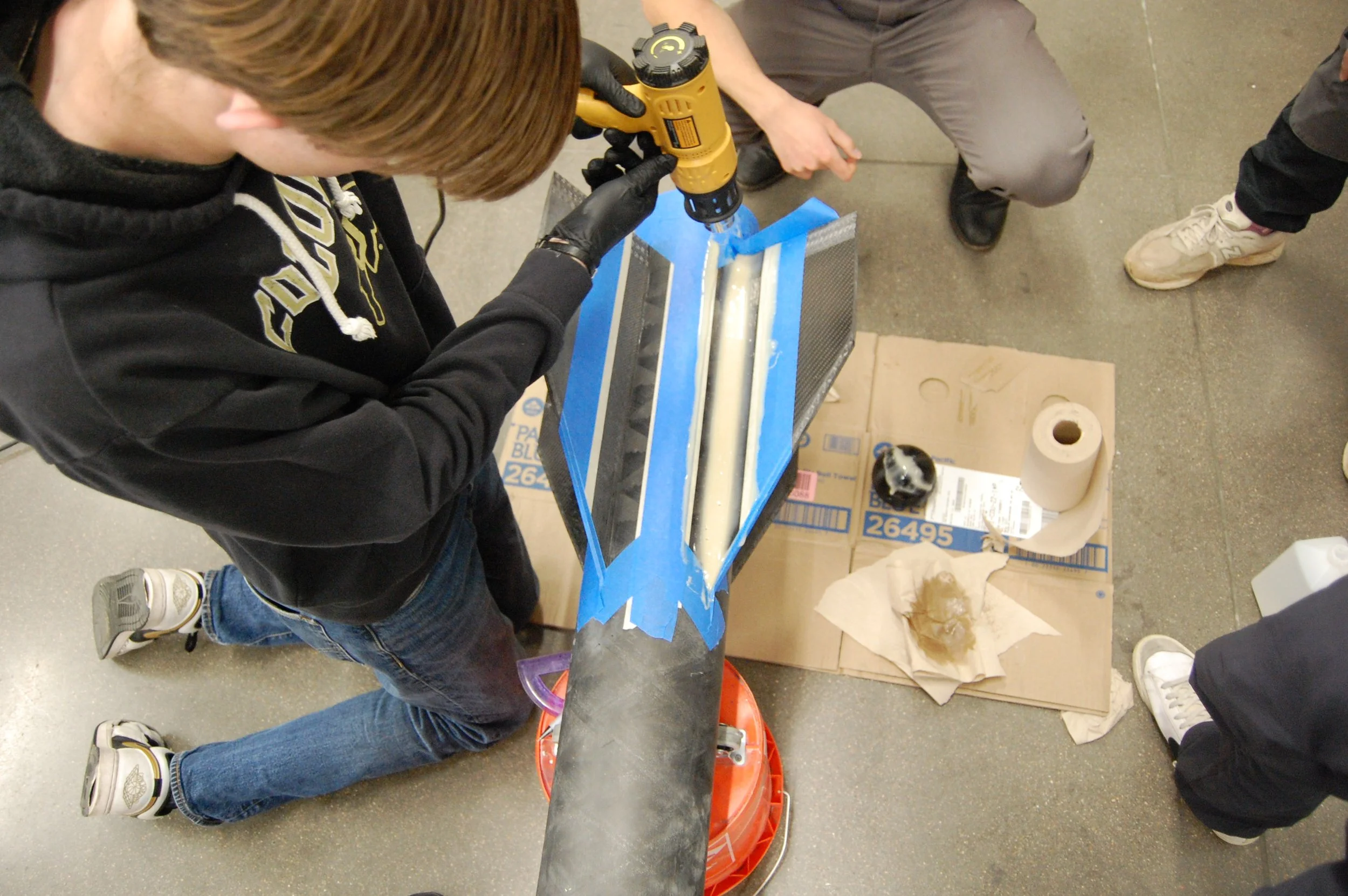
Mamba III Fin Fillets
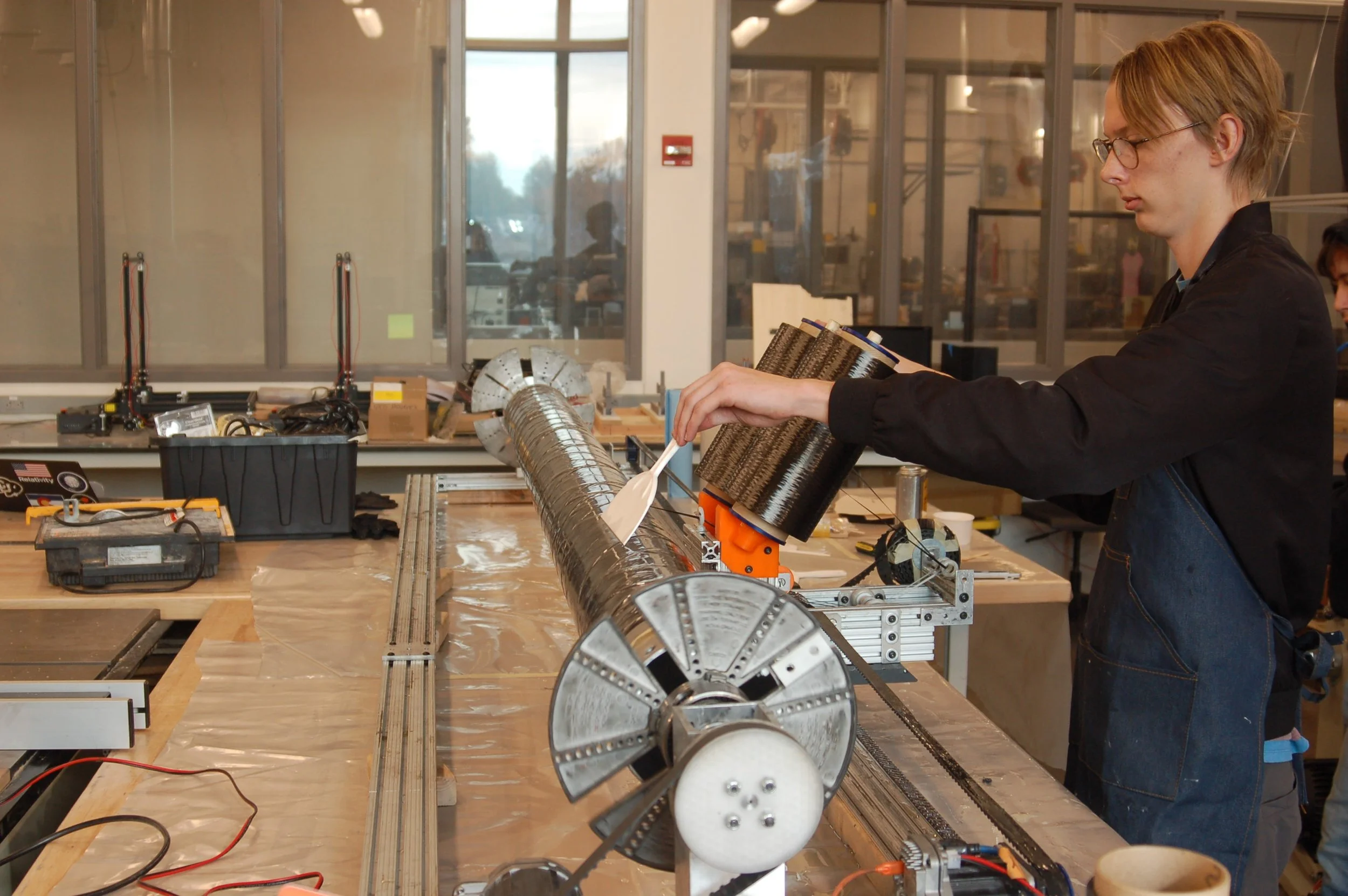
Mamba III Casing Wind
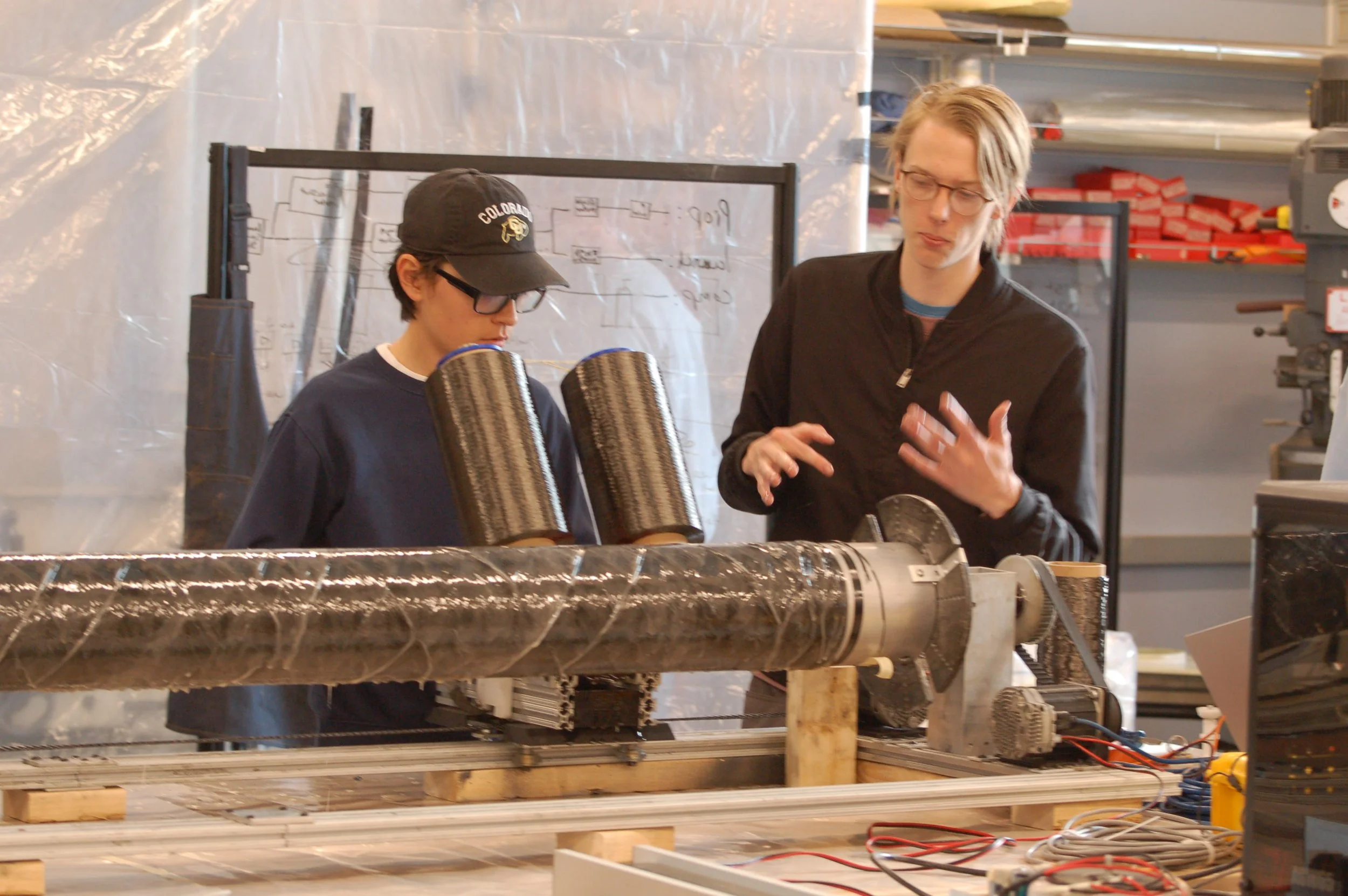
Mamba III Casing Wind
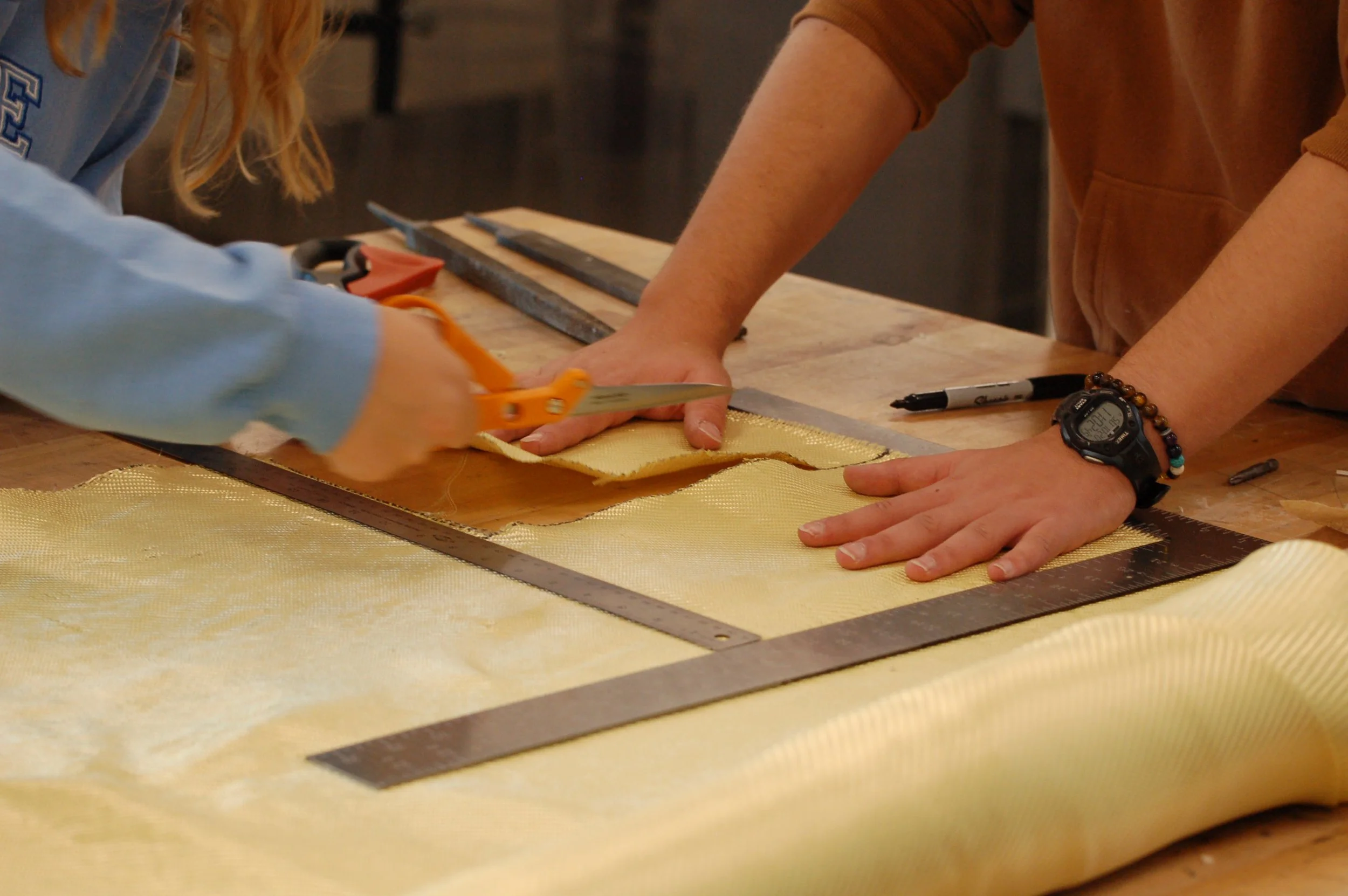
Mini Mamba Insulator Fabric Cutting
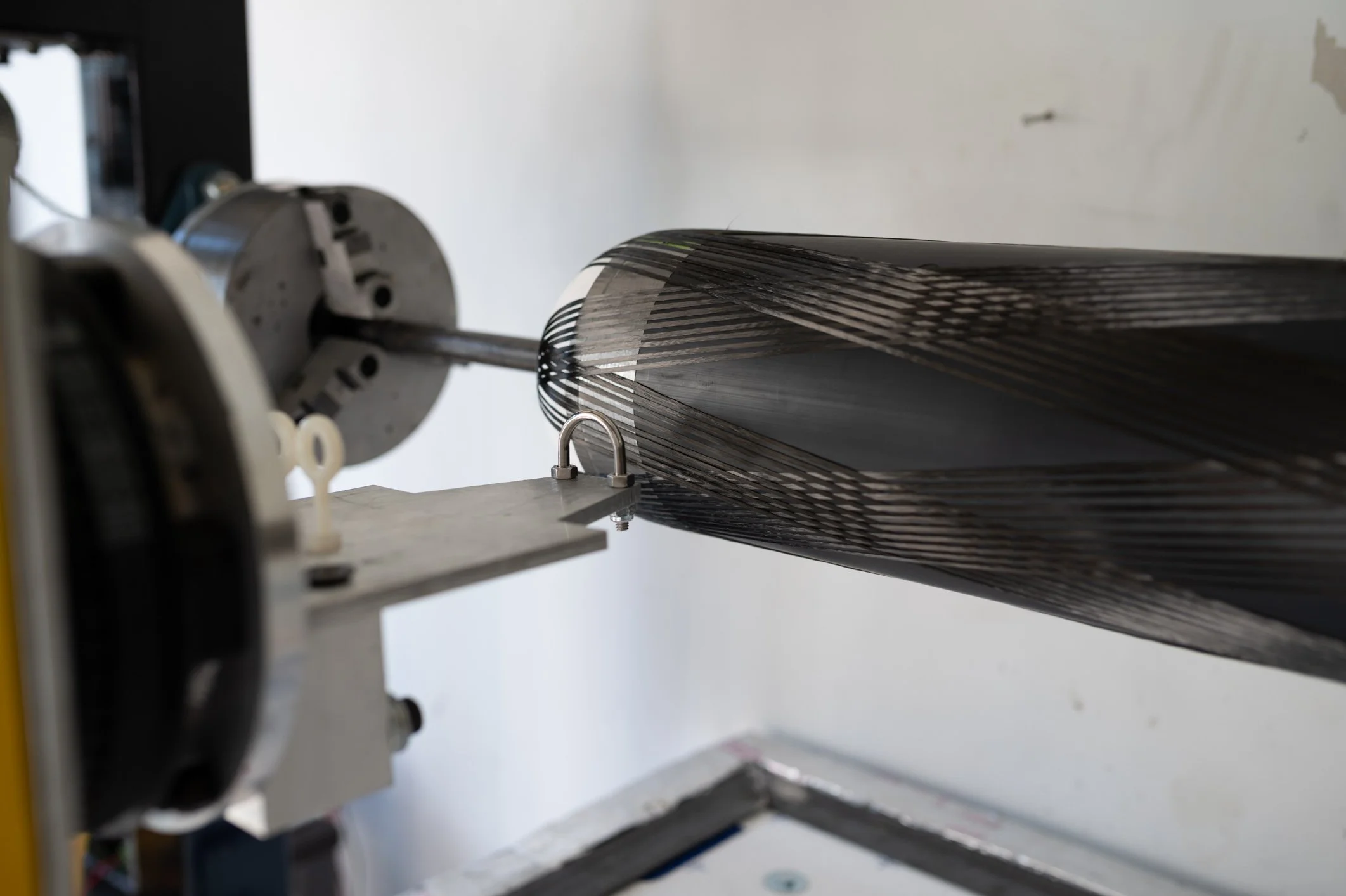
COPV Test Wind on 4-ax Winder